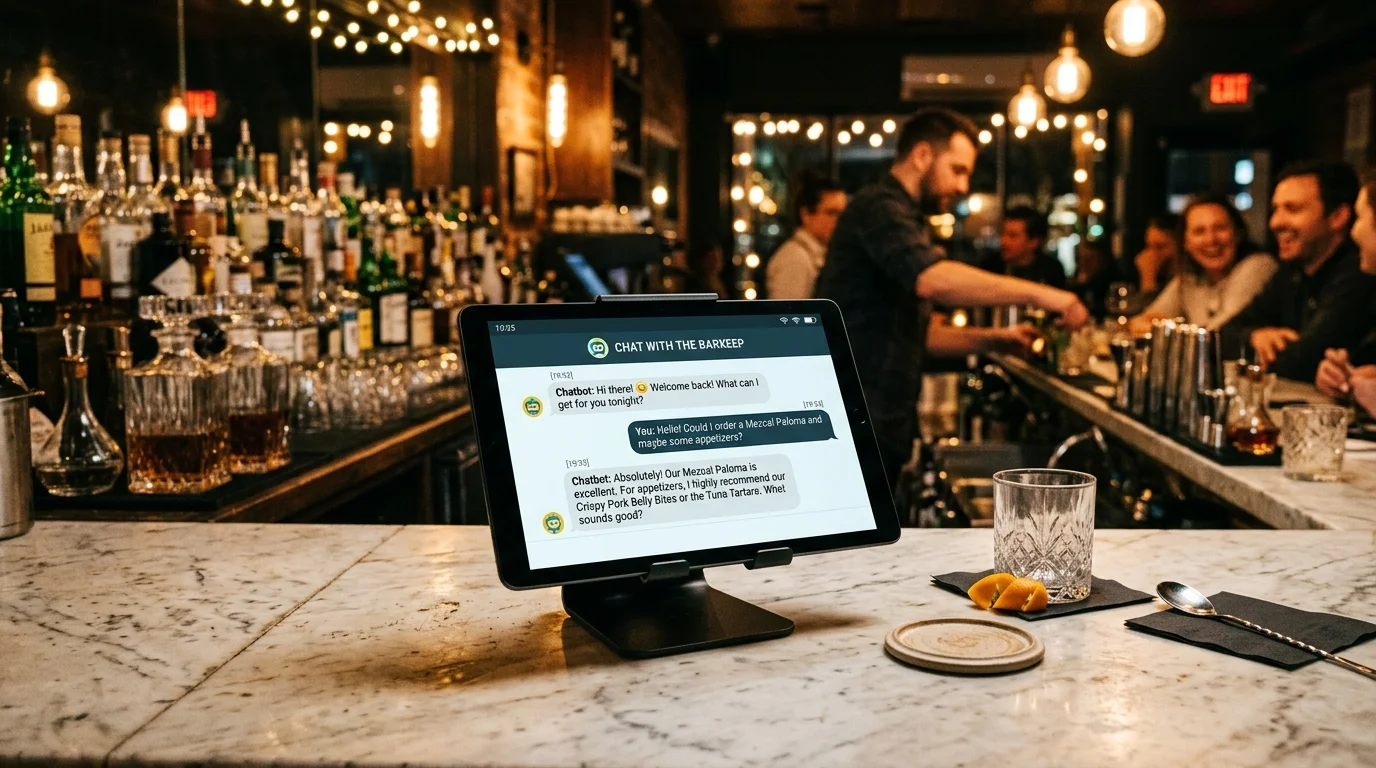
The Brickell steakhouse and the Wynwood taqueria came to us within a week of each other with the same question. Which restaurant chatbot should we use. Both were looking at Popmenu, Slang AI, and a couple of the newer platforms. Both had budget for either off-the-shelf or a custom build. Both wanted a clear answer.
The steakhouse ended up on Slang AI plus a Twilio integration. The taqueria ended up with a custom build. Both were the right decision for their business, and neither would have been right for the other.
This post is the actual decision framework we use for restaurant chatbots in 2026. When off-the-shelf wins, when custom wins, and the five cost lines that decide which way a restaurant should go. If you want us to build the custom option, our AI chatbot service is where this work lives.
A note on scope. This is written for restaurants doing $30,000 or more in monthly revenue. Below that, off-the-shelf almost always wins because the cost math cannot support a custom build. Above $2 million in monthly revenue you are in enterprise territory, and the calculus shifts again toward heavier custom builds.
The Off-the-Shelf Options in 2026
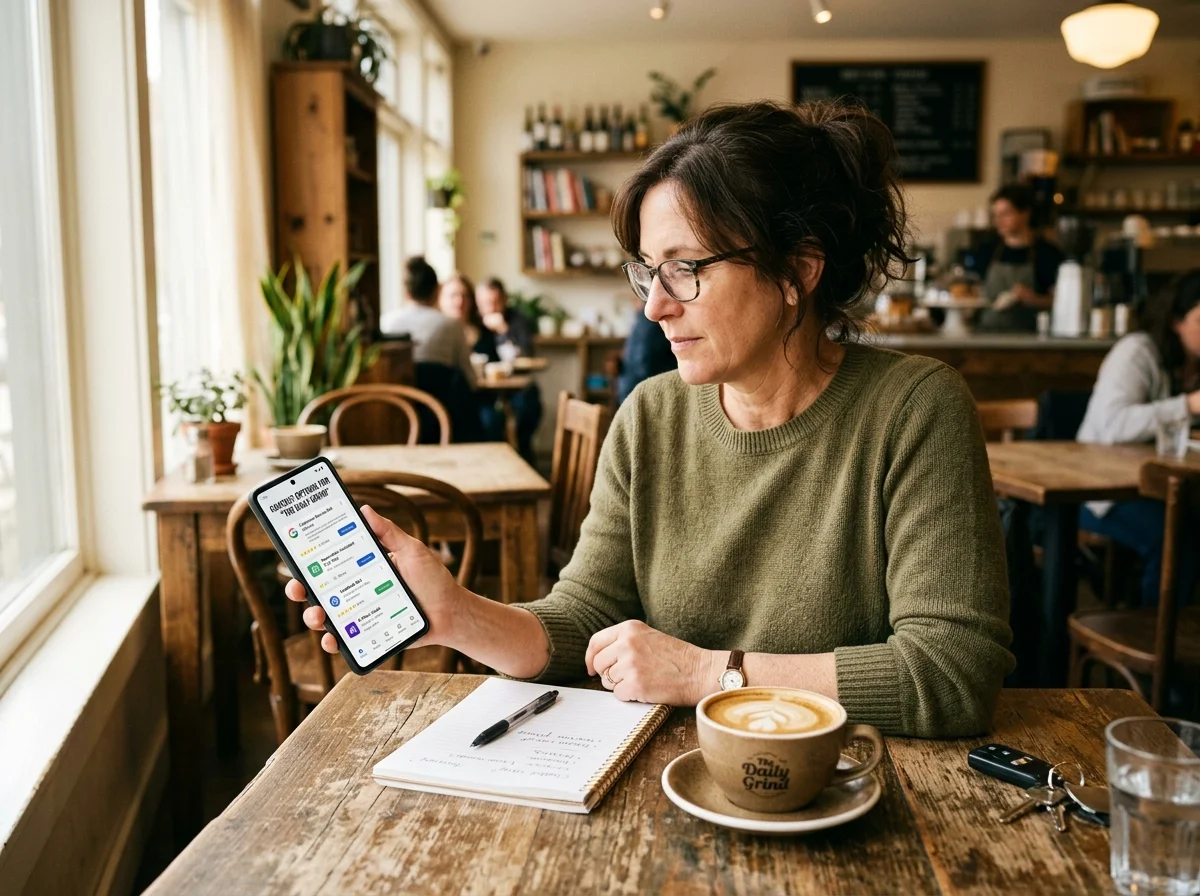
Five off-the-shelf platforms dominate the restaurant chatbot market in 2026. Each has strengths.
Popmenu is the most established. Deep menu management features. Solid AI chat baked in. Voice AI added recently. Priced $250 to $550 monthly depending on features. Fits full-service restaurants that want a single platform for website, menu, and chat.
Slang AI is a voice-first solution that also handles chat. Excellent for restaurants with high phone volume. Very good conversation quality. Priced $150 to $400 monthly. Fits restaurants that need phone answering more than website chat.
Kickfin is newer, focused on restaurant operations more broadly, with chatbot as one feature. Fits multi-location operators who want the chatbot alongside back-office tools.
Owner.com bundles chat with a full restaurant marketing stack including website, ordering, and text marketing. Priced $199 monthly for the base plan. Fits independent restaurants that want everything from one vendor.
Momos offers a specialized AI stack for hospitality including chatbot, review management, and marketing automation. Enterprise-focused pricing but works down-market for ambitious independents.
Beyond these five, general-purpose chatbot platforms (Intercom, Drift, Tidio) also serve restaurants, though usually with less industry-specific functionality.
When Off-the-Shelf Is the Right Answer
Four situations where off-the-shelf wins clearly.
Standard operations, standard needs. A restaurant that takes reservations through OpenTable or Resy, has a menu that changes seasonally not weekly, uses a common POS, and gets a normal mix of inbound inquiries will find off-the-shelf platforms handle 85 percent of what they need at a fraction of the cost of custom.
Budget is tight for the initial investment. A functional custom restaurant chatbot with real integrations is a meaningful upfront investment. If your budget is limited, off-the-shelf is the only option that produces good results.
Speed to launch matters. Off-the-shelf platforms can launch in a few days to two weeks. Custom builds take four to eight weeks. If you need the chatbot running immediately (a new restaurant opening, an existing restaurant losing calls right now), off-the-shelf wins.
Team has no technical capacity. Custom builds require someone on your side who can approve integration decisions, review the conversation flows, and make changes over time. Off-the-shelf platforms have visual configuration that non-technical operators can manage.
For most Miami restaurants reading this, off-the-shelf is the right answer at least for the first year.
When Custom Wins
Four situations where a custom build earns its keep.
Multiple integrations that off-the-shelf cannot handle. If your restaurant needs the chatbot to write to your reservation system, update your CRM, check your loyalty program, calculate custom catering quotes, and coordinate delivery with your own courier network, no off-the-shelf platform will handle all of these. A custom build can.
Bilingual operations that need parity. Off-the-shelf platforms handle Spanish, but with lower quality than English. A custom build for a Miami restaurant with heavy Spanish-speaking customer volume can be trained specifically on Miami Spanish, restaurant-specific vocabulary, and your particular menu items. The quality difference is meaningful.
Multi-location operations with location-specific logic. A restaurant group with five Miami locations, each with different hours, menus, and staff, benefits from a chatbot that routes intelligently between them. Off-the-shelf platforms handle this awkwardly. Custom handles it cleanly.
Distinct brand voice matters. Off-the-shelf chatbots sound like off-the-shelf chatbots. Fine for most restaurants. Not fine for high-end concepts where every touchpoint is expected to match the brand. A custom build can be voice-tuned specifically.
For Miami restaurants matching two or more of these criteria, custom starts to pencil out.
The Real Cost Comparison
Actual numbers from Miami restaurant deployments in the last twelve months.
| Cost bucket | Off-the-shelf typical | Custom build |
|---|---|---|
| Initial setup | $0 to $2,500 | Higher upfront, scoped per build |
| Monthly platform | $150 to $550 | Comparable ongoing cost |
| Integration add-ons | Varies (often $50 to $200 monthly) | Usually included in build |
| Ongoing maintenance | Included | Included, then as needed |
| Customization work | Limited | Included, then hourly |
| 3-year total | $8,000 to $22,000 | Higher, depending on scope |
Custom carries a higher upfront and total cost over three years for a typical restaurant. The trade-off is flexibility and integration depth. For restaurants where the flexibility does not matter, custom is overpaying. If you want a scoped number for your specific setup, reach out and we will put one together.
For restaurants where the flexibility does matter (multi-location, custom catering logic, deep bilingual, unique brand voice), custom often pays back within 12 to 18 months because the chatbot actually handles what the business needs, while off-the-shelf tools force awkward workarounds.
The Five Cost Lines That Actually Decide
Beyond the platform sticker price, five specific cost lines decide which way a restaurant should go.
Integration cost. How many systems does the chatbot need to talk to? One system (reservations) is easy. Five systems (reservations, CRM, loyalty, POS, custom catering) start to break off-the-shelf platforms. Our API integrations service is often where this piece gets built.
Menu volatility. How often does the menu change? Weekly rotating specials mean the chatbot needs to update automatically from a menu source. Monthly seasonal shifts are fine for off-the-shelf. Restaurants with fast menu velocity often need custom or careful integration work.
Volume mix. What kinds of inquiries dominate your calls and messages? If 80 percent are reservations, off-the-shelf handles that easily. If your mix is 30 percent reservations, 25 percent catering, 20 percent private events, 15 percent menu questions, and 10 percent other, that variety is harder for off-the-shelf.
Language balance. What percent of inquiries come in Spanish? Under 20 percent, off-the-shelf handles it. Over 40 percent, custom starts to make sense. Miami specifically weights this consideration heavily.
Voice and brand sensitivity. Are you a casual neighborhood spot or a high-end concept where every touchpoint must reflect the brand? Casual concepts do fine with off-the-shelf. High-end concepts often need custom to preserve voice.
Score each of these lines for your restaurant. If two or more score "harder for off-the-shelf," start scoping custom.
What Off-the-Shelf Restaurant Chatbots Do Well
Being fair to the category, five things off-the-shelf platforms do genuinely well in 2026.
Reservation booking through embedded widgets with the major platforms (OpenTable, Resy, Tock, SevenRooms). This is table stakes and every platform handles it.
Menu FAQ answering. Trained on the menu, off-the-shelf platforms answer dietary, ingredient, and preparation questions accurately.
Hours, location, and basic operational information. Trivially handled by any platform.
Simple lead capture for events and catering. Standard forms with basic qualification. Enough for most restaurants.
Review request automation. Post-visit texts asking for a Google review. Standard feature in most platforms.
If your needs stop at these five, off-the-shelf is definitely the answer.
What Custom Restaurant Chatbots Do Uniquely Well
Five things that require custom to do well.
Live menu integration with a POS or menu management system, so the chatbot always knows what is currently on offer including sold-out items.
Complex catering quote generation with pricing rules, minimum orders, delivery windows, and staffing requirements.
Loyalty program integration where the chatbot recognizes returning members and adjusts responses accordingly.
Custom voice and personality tuning where the chatbot sounds specifically like the brand rather than generic.
Multi-agent handoffs where different chatbot personas handle different tasks (a booking agent for reservations, a menu specialist for questions, a private events coordinator for large parties) and hand off to each other with full context.
Our AI agents service covers the voice side of this for restaurants that also want AI phone handling.
Common Miami Restaurant Chatbot Mistakes
Four patterns waste money.
Buying a full-featured platform for a simple use case. If you just need reservation confirmations and menu FAQ, you do not need the enterprise plan. Buy the tier that fits.
Custom-building for edge cases you will never need. Custom builds sometimes scope in complex logic for scenarios that happen once a year. This adds cost without value. Scope tight.
Ignoring the human handoff. The chatbot should always know when to hand off to a human, and the human should always have full context of the conversation. Both sides of this get skipped and both sides cost you.
Setting and forgetting. Chatbots need monthly attention. New menu items, new hours, new common questions, new integrations. Restaurants that treat the chatbot as a one-time build see quality decay within a quarter.
If you want to see examples of both off-the-shelf implementations and custom builds we have shipped for Miami restaurants, our portfolio has recent work.
The One Thing to Do Tomorrow
Pull the last 30 days of messages, DMs, and calls to your restaurant. Categorize each into: reservation, menu question, private events or catering, complaint, other. If the top three categories account for more than 70 percent of your volume, off-the-shelf will handle you well. If the mix is more scattered, or if custom logic (bilingual, multi-location, unique catering, live menu integration) shows up as a real requirement, custom is worth scoping.
When you are ready to make the decision with a real conversation instead of a comparison chart, start a project with us and we will look at your specific volume, your integrations, and your brand voice, and tell you honestly which path fits.