



The HVAC contractor in Doral was losing eight to twelve service calls a week to voicemail after 5 p.m. We did the math with him on a napkin. At an average ticket of $340 per service call and a 60 percent conversion rate from caller to job, those missed calls were costing him roughly $1,600 a week. About $83,000 a year. From a phone that nobody answered between dinner and dawn.
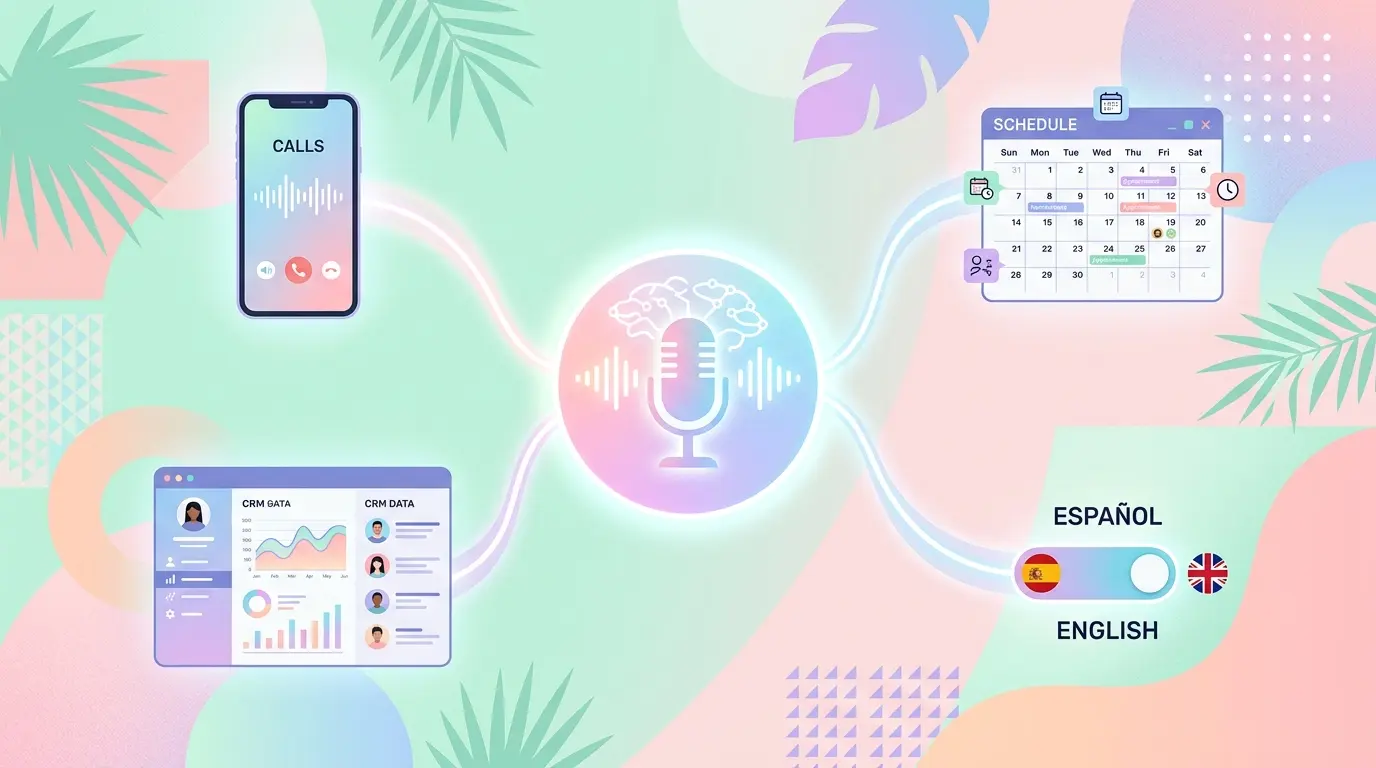
We built him an AI voice agent. It answers in English or Spanish, takes the caller's address, the equipment brand, a description of the issue, and books them into the next available slot in his CRM. In the first six months it captured 246 calls that would have gone to voicemail and booked 161 of them. The math worked in the first few weeks.
This post is about when AI voice agents actually pay off for Miami small businesses, how they really work in 2026, what they cost, and the situations where they quietly fail. If you want our team to scope one for your business, our AI agents service is built around exactly these use cases.
A note on what we mean by "AI voice agent." We mean a real-time conversational voice system that picks up phone calls, holds a coherent conversation in English or Spanish, takes structured information, and books or routes the caller. We do not mean an IVR phone tree. We do not mean a generic answering service. The technology has moved past both of those in the last two years.
When a Voice Agent Earns Its Keep
Voice agents are not the right answer for every Miami business. They earn their keep in three specific situations.
The first is high after-hours call volume. If you get more than five calls a week between 6 p.m. and 7 a.m., and your conversion rate is meaningful, a voice agent will pay for itself fast. This is most contractors, plumbers, electricians, HVAC, locksmiths, towing, emergency restoration, and on-call medical or veterinary services. The Miami specific twist: hurricane season pushes call volume way up between June and November for any business tied to homes or property.
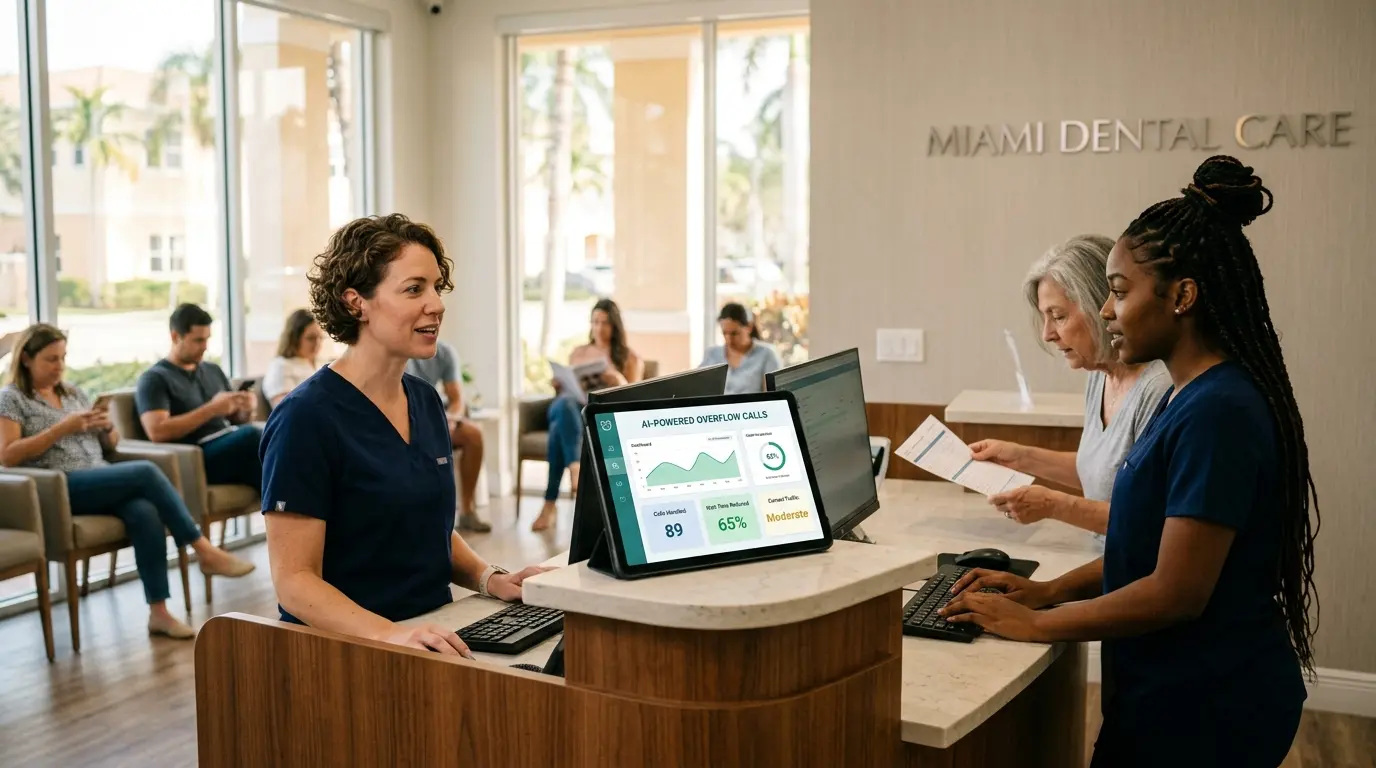
The second is high peak-hour overflow. If your front desk drops more than 10 percent of inbound calls during your busiest hour, a voice agent can absorb the overflow without you hiring a second receptionist. We see this constantly in med spas, dental practices, and bilingual service businesses where the front desk speaks one language and 40 percent of calls come in the other.
The third is bilingual demand. If a meaningful share of your inbound calls come in Spanish, but only one or two staff speak Spanish, a voice agent that handles both languages without a transfer step recovers calls you are losing to "let me grab someone." We have measured Spanish-call abandonment rates of 30 to 45 percent at small businesses that did not have ready bilingual coverage. A voice agent closes that gap entirely.
Outside these three situations, voice agents are usually a nice-to-have, not a must. A small business with low call volume and a friendly human receptionist who picks up every call should not be racing to deploy AI. Spend the budget elsewhere.
What a 2026 Voice Agent Actually Does
The technology in this space jumped sharply between 2024 and 2026. Three capabilities matter most for small business use.
Natural conversation, including interruptions. Modern voice agents handle the messy way humans actually talk. Pauses, ums, mid-sentence corrections, accent variations. The caller does not feel like they are talking to a phone tree.
Structured data capture with verification. A voice agent can pull a service address, repeat it back, confirm it, and write it to your CRM correctly. It can take an insurance carrier name, spell it back, and tag it for billing. The accuracy on these structured fields runs around 92 to 97 percent in real deployments, well above what tired human receptionists hit at 7 p.m. on a Friday.
Bilingual handling with mid-call switching. A caller can start in Spanish, switch to English mid-sentence, and the agent stays with them. This is genuinely new. Even two years ago this was a Silicon Valley demo. In 2026 it is a Tuesday tool for a Hialeah dental practice.
The technology layer most agencies use is a combination of a real-time speech model (typically from Deepgram or ElevenLabs), an LLM for understanding and generating the response (typically GPT-4-class or Claude), and a workflow engine for the booking, routing, and CRM updates. The exact stack matters less than the integration. A voice agent that sounds great but does not write the booking into your calendar correctly is a demo, not a business tool.

The Real ROI Math From Two Miami Clients
Below is the actual shape of the numbers from two Miami clients running voice agents for 12 months. Names removed. Numbers honest.
| Metric | Doral HVAC contractor | Brickell dental practice |
|---|---|---|
| Monthly inbound calls | 740 | 1,420 |
| Calls handled by voice agent | 312 (42%) | 489 (34%) |
| Avg human answer rate before | 76% | 81% |
| Avg human answer rate after | 96% | 98% |
| New appointments attributed | 161 (six months) | 287 (six months) |
| Avg ticket | $340 | $215 |
| Net revenue impact (6 mo) | ~$54,700 | ~$61,700 |
| Time to payback | Weeks, not months | Weeks, not months |
A few honest caveats. The dental practice had a higher build cost because we integrated with their practice management software for live availability. The HVAC client got a stronger payback because his existing voicemail-to-callback conversion was very low. Both businesses already had decent inbound call volume. Without that baseline, neither would have seen returns this fast.
These numbers are not promises. They are evidence. A voice agent that does not match your call volume, your existing booking system, and your specific situation will not produce results like these. If you want to scope what the numbers might look like for your business, see our pricing for a typical build and we will model it out for you.
What You Need Before You Build One
The biggest mistake we see is businesses trying to bolt a voice agent onto a broken process. The agent inherits the brokenness.
You need a calendar or booking system the agent can write to in real time. Google Calendar works. Calendly works. A practice management system with an API works. A paper notebook on the front desk does not.
You need a CRM the agent can update, or at minimum a clean inbox the agent can email. The caller's information, the conversation transcript, and the requested action all need to land somewhere your team will see them. Our CRM management service is often the first step before the voice agent itself.
You need a clear escalation rule. Some calls must reach a human. A frustrated complaint. A medical emergency. A press call. A caller who explicitly asks for a human. The agent needs to know when to hand off and where to route the call.
You need a phone number plan. Most businesses route their main line through the agent with a fallback to a human ring group. Some businesses keep the main line human and add a second line for the agent (for after-hours or overflow). Either works. Pick deliberately.
You need a script of the situations the agent must handle. Not a word-for-word script. A list of the conversation types: new booking, reschedule, cancellation, hours question, address question, pricing question, emergency, complaint. The agent needs explicit guidance for each.
Where AI Voice Agents Quietly Fail
We have seen this go wrong in three ways. All preventable.
The agent that promises things the business cannot deliver. A med spa client wanted the agent to "be friendly and accommodating." Without explicit constraints, the agent started promising same-day appointments the practice could not actually fill. Lesson: tell the agent exactly what it can and cannot promise.
The agent with no escalation. A frustrated caller looking for a refund got a polite scripted reply for six minutes and hung up. The agent had no rule for routing complaints to a human. We added one rule. The pattern stopped immediately.
The agent that lives in a different system from the team. The agent booked calls that the team did not see until the next morning. By then the customer had called a competitor. Lesson: route every booking and every transcript to a channel your team monitors in real time. A shared Slack channel works. A CRM notification works. An email digest at 8 a.m. does not.
A smaller failure mode worth naming: voice agents that sound too robotic. The 2024 generation had a flat, generic voice. The 2026 generation can be warm, friendly, and on-brand if you take time to pick the voice and tune the style. Spend the hour. The difference in caller comfort is enormous.
Build, Buy, or Wait
Three honest paths for a Miami small business in 2026.
Build a custom voice agent. Choose this if you have meaningful call volume, an existing CRM or booking system, and at least one workflow that is unique to your business. Time to launch: three to six weeks. We scope pricing per build once we understand your call volume and integrations.
Buy an off-the-shelf voice solution. Tools like Slang AI for restaurants, Goodcall for service businesses, and Synthflow for general use cases are real options. Total cost: $200 to $700 monthly, minimal build. Time to launch: one to three weeks. Fit is narrower but speed is faster.
Wait. Choose this if your call volume is low, your booking system is messy, or you do not have a clear use case. The technology is improving every quarter. You are not losing much by waiting six months if the math today is borderline. Spend the budget on the basics first.
For most Miami contractors, clinics, and service businesses we work with, the custom build is the right path because the integrations and the bilingual handling matter more than the speed of launch. For most Miami restaurants, an off-the-shelf tool like Slang AI is the right starting point. You can see examples of both in our portfolio.
The One Thing to Do Tomorrow
Pull your phone records for the last 30 days. Count the calls that came in after hours, the calls that went to voicemail during business hours, and the share that came in Spanish. If the total is more than 25 percent of your inbound volume, a voice agent will probably pay for itself in a quarter.
When you are ready to scope one, start a project with us. We will look at your call patterns, your existing systems, and your busiest hour, and tell you honestly whether a voice agent belongs in your next 90 days or whether your budget belongs somewhere else first.