



The Charleston boutique owner had three proposals in front of her. One from a solo freelancer for $2,800. One from a mid-sized agency for $18,000. One from a full-service shop for $47,000. All three claimed to be "the right fit for a growing business." She was smart and busy and had no way to compare like for like. So she picked the middle one because it felt safe. Ten months later she called us to rebuild what the middle agency delivered.
The middle number is not always wrong. But "it felt safe" is not a decision framework. This post is one. Ten questions to ask any web design agency, what to expect in an honest answer, and the red flags that should end the conversation before you sign a contract. Use it on us at our about page. Use it on any three agencies you are considering. The wrong answers will tell you more than the right ones.
A note on scope. This framework is written for business owners hiring a web design agency between $5,000 and $50,000. Above that, you should be running a formal RFP. Below that, you are likely hiring a freelancer, and some of these questions still apply but the process is different.

Question 1: Who Specifically Will Do the Work?
Not "our team." Names. Roles. Experience.
Ask for the senior designer's portfolio, the developer's code samples or GitHub, and the project manager's name. Confirm each person is on staff, not a contractor pulled in for the pitch and disappeared before the build.
An honest answer names people. A dishonest answer stays vague. A real agency will forward you three portfolio links from the actual designer on your project within 24 hours. A weak agency will offer "our team has decades of combined experience" and hope you move on.
For agencies larger than eight people, ask which person on the team specifically will be your main point of contact. If the answer changes between the pitch and the kickoff, you were sold by a rep who is not building your site. That is a red flag.
Question 2: Walk Me Through the Discovery Process
This is where you separate templated agencies from real ones. A good discovery process has stages, deliverables, and named outputs.
Expect an answer that includes: a discovery workshop or kickoff (usually 2 to 4 hours), audience research or stakeholder interviews, a sitemap document, a wireframe document, and a written creative brief that both sides sign off on before design starts.
A bad answer sounds like: "We have a kickoff call and then we get to work." That means the agency is going to make design decisions with only the information you volunteer during the kickoff. Every misalignment discovered later will be a change order billed to you.
A minimum acceptable discovery for a $10,000-plus build: 10 to 20 hours of dedicated agency time before any pixels are pushed.
Question 3: What Does the Scope Cover, Line by Line?
Not "8 pages" but 8 unique templates or 3 templates repeated across 8 pages. Get both numbers.
For each item in the scope, confirm: revision rounds included, who writes the copy, who sources or shoots the imagery, whether integrations are included (and which ones), whether hosting setup is included, whether training is included, and whether post-launch support is included in the price or billed separately.
A one-page scope on a $15,000 project is a warning. A three-page scope with real line items on a $6,000 project is a good sign.
If the proposal is intentionally vague, ask the agency to rewrite it before you sign. If they cannot or will not, you know what you needed to know.
Question 4: Who Owns What After Launch?
Ownership is the question most owners forget to ask and most regret not asking later.
At launch, you should own: the domain, the hosting account (or the ability to transfer to your own hosting), the CMS admin access, all design files (Figma, Photoshop, or wherever they were made), all source code, and all content and copy produced during the project.
Any exceptions should be named in writing before you sign. "The agency retains rights to proprietary widgets" is fine if it is disclosed. "We will handle the hosting for you" often becomes a lock-in trap when you want to leave.
If the agency dodges the ownership question or answers with corporate speak, they are protecting themselves at your expense. Push. If they still dodge, move on.
Question 5: Can I Talk to Three Recent Clients?
The single most useful data point in this whole framework is a five-minute phone call with a client who launched with the agency in the last twelve months.
Ask each reference: was the timeline hit, did the scope creep, was communication reliable, was the final product what you expected, and would you hire them again for a bigger project.
Watch for enthusiasm. A reference who says "yes, they were fine" is not a happy reference. A reference who volunteers a story is.
Also watch for a pattern. If all three references praise "the design" but hedge on "timeline" or "communication," you have learned something important.
Question 6: What Is Your Timeline, and What Puts It at Risk?
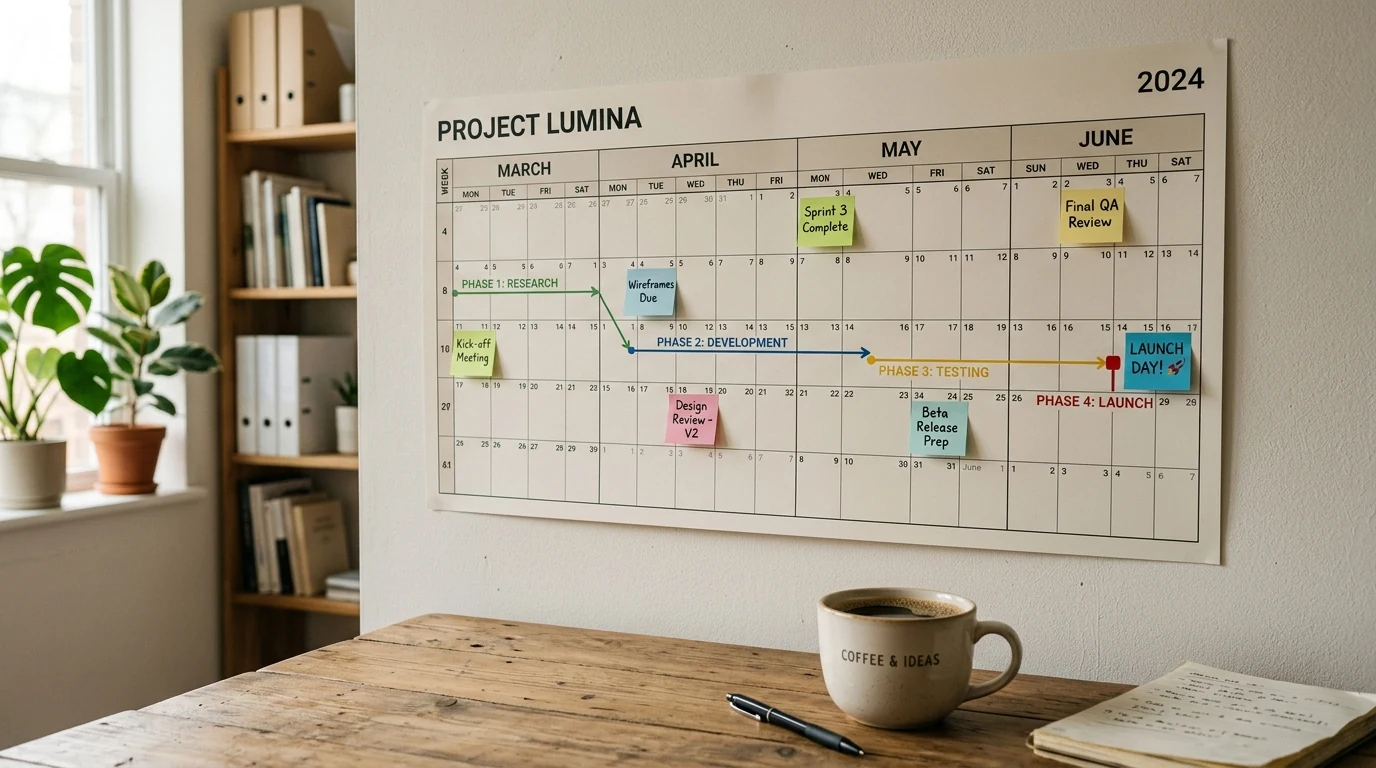
An honest timeline for a mid-range custom build is 8 to 14 weeks from signed contract to launch. Shorter is possible but signals templated work. Longer is possible but signals process problems or client-side delays.
The follow-up question is more revealing. Ask what puts the timeline at risk. An honest agency will name client-side delays first (content approvals, image delivery, feedback turnaround) and explain what you owe them, by when, to keep the schedule. A dishonest agency will blame past clients or say "we always deliver on time" (which is not a real answer).
If the timeline pushes without a change in scope, the price should not push. Confirm this in the contract.
Question 7: What Does Success Look Like?
If the agency cannot name success metrics, they are shipping a design and hoping you like it. That is not a partnership. That is a transaction.
Real success metrics include: mobile Lighthouse score above 85, accessibility WCAG 2.1 AA pass, all key user flows tested, conversion rate baseline established, organic ranking baseline established for a keyword shortlist.
Some agencies push back on being held to conversion or ranking numbers because those depend on factors beyond design. Fair. But they can still commit to speed, accessibility, and QA numbers. If they will not commit to any measurable outcome, they are selling craftsmanship without accountability.
Bake at least two measurable outcomes into the final acceptance criteria. Tie the final payment to hitting them.
Question 8: What Does Post-Launch Support Look Like?
Websites are not oil paintings. They need updates, patches, and monitoring. The agency will either offer to handle this or leave you to fend for yourself. Both are valid. Vague is not.
Ask specifically: response time for critical issues, response time for minor updates, monthly maintenance cost or hourly rate, what is covered in ongoing support (security patches, plugin updates, backups, uptime monitoring, minor content updates), and what happens if you switch agencies later.
For most small businesses, a $150 to $500 monthly maintenance retainer with a real agency is worth it. Sites break. Fast, competent response saves you when they do. Our full service list shows how maintenance connects to the broader work.
Question 9: What Technology Stack Will You Build On, and Why for My Business?
Every agency has a preferred stack. That is fine. What you want is an agency that explains why their stack is right for your specific business, not just why they prefer it.
WordPress is the right choice when content strategy dominates and you have people who will update the site weekly. Webflow is the right choice for content-light sites with strong visual design needs and a small team. Shopify is the right choice for ecommerce-first businesses. Custom Nuxt or Next is the right choice for premium builds, performance-critical sites, and complex integrations.
An agency that recommends the same stack for every client is either lazy or limited. Neither is what you want.
Question 10: What Do You Not Do Well?
The cheat code. A confident agency will tell you honestly.
We do not do enterprise procurement. We do not do ad-heavy programmatic SEO at scale. We do not do brand-from-scratch for businesses that have not done their positioning work. An agency that answers this question well is an agency that knows itself, which almost always means it delivers reliably in the areas where it is strong.
An agency that answers "we do it all" is either dishonest or too small to know its own weaknesses. Either way, walk.
The Red Flags That Should End the Call
If any of these show up, the answer is no.
Full payment upfront. Industry standard is 30 to 50 percent deposit with milestone payments.
Refusal to name specific team members. Everyone hides behind "the team" a little, but total refusal is a warning.
Portfolio that all looks the same. Fine to have a house style. Not fine to have one template with different logos.
Refusal to share references. NDAs cover work, not the relationship. Vague refusals mean references would not speak well.
Pricing that changes between the pitch and the contract without a scope change.
Pressure to sign quickly. Any agency that pressures you at the pitch is an agency that will pressure you throughout the build. Say no.
How to Score Three Proposals Side by Side
Score each agency on each of the ten questions, 1 to 5, based on the quality and specificity of the answer. Add the totals. The highest total wins, not the lowest price.
The lowest total often correlates with the lowest price, but not always. The middle proposal is often the highest total, but not always. The most expensive proposal is rarely the highest total for a small business.
If your framework gives you a clear winner, go with it. If two agencies are within 3 points of each other, the tiebreaker is references and post-launch support. That is where actual delivery quality lives.
You can run this framework on our team by browsing our portfolio first and bringing the questions to a discovery call.
The One Thing to Do Tomorrow
Pull every proposal you have received, then rewrite each one as a bullet list of specific deliverables in plain English. If you cannot rewrite a proposal in plain English because the vendor did not give you enough specifics, that vendor cannot deliver. The best proposal is the easiest to translate.
When you want to run these ten questions against our team, start a project with us and we will answer each one on the first call, share three references within 24 hours, and tell you honestly whether we are the right agency for your project.