


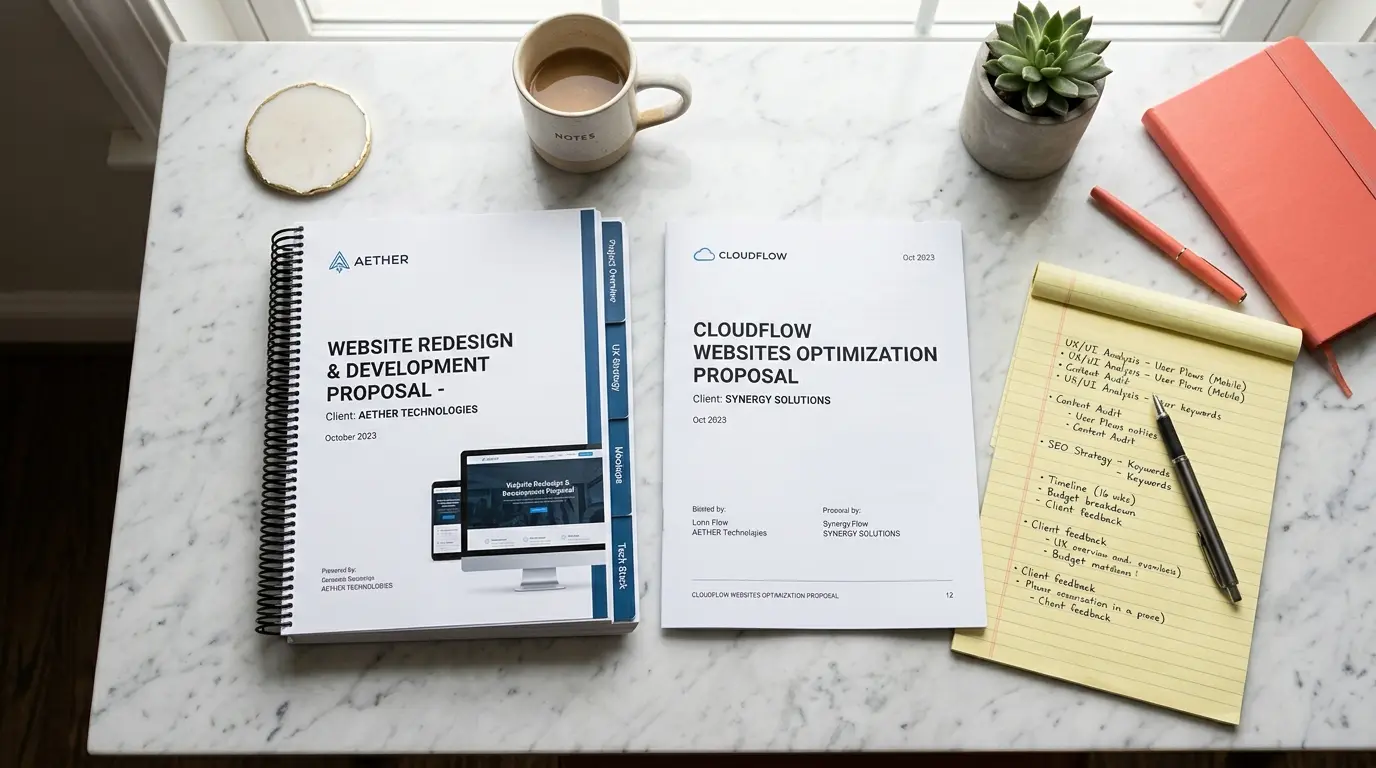
The first proposal said $1,800. The second said $42,000. Same business, same six pages, two Miami agencies, three weeks apart. The owner sat across from us with both PDFs printed and asked the obvious question. Which one is honest?
Neither, fully. The $1,800 was a templated site with a 12-month contract and a per-edit upcharge schedule we counted to $7,400 over the term. The $42,000 was a custom Nuxt build the business did not need. We quoted a right-sized custom build with a clear scope and a maintenance retainer. The point is not that we were right. The point is that Miami web design pricing in 2026 is wildly inconsistent, and most pricing pages are written to keep you guessing.
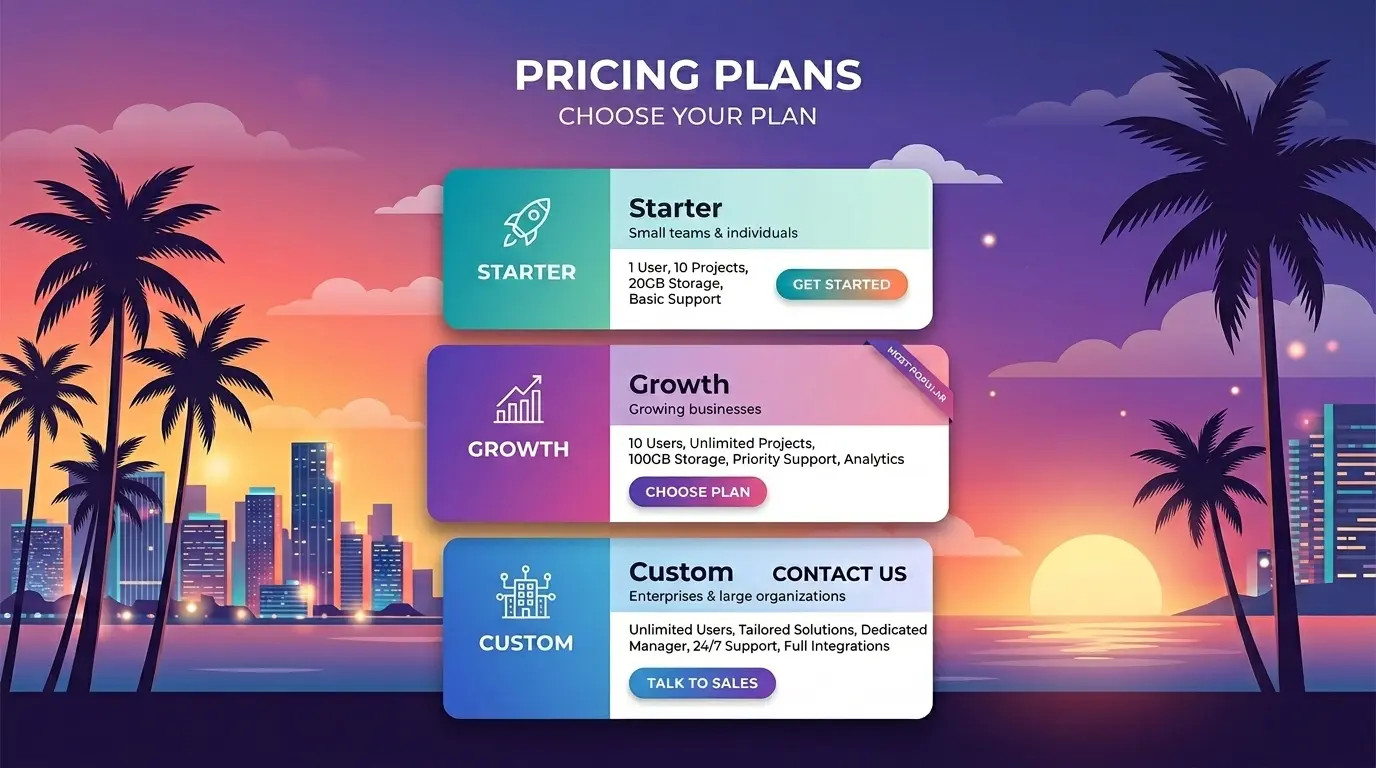
This post fixes that. We will give you the real cost ranges for Miami web design in 2026, what each tier actually includes, what drives a quote up, and the line items that quietly cost you later. If you want the short version, our pricing page has the same tiers laid out, with what is included.
The 2026 Miami Web Design Price Tiers
We track quotes from every Miami agency we hear about, partly out of curiosity, partly to keep our own ranges honest. Here is the shape of the market in mid-2026, sorted by what you actually get.
| Tier | Typical 2026 Miami price | What it usually is | Who it fits |
|---|---|---|---|
| DIY builder | $0 to $600 / year | You build it on Wix, Squarespace, or a Webflow template. | Solo founders pre-revenue, testing an idea. |
| Templated agency | $1,500 to $4,500 | Templated theme on WordPress or Webflow, light customization, 1 to 2 weeks. | Brand-new businesses with a tiny budget who need a presence fast. |
| Mid-range custom | $5,000 to $12,000 | Custom design on a known stack, 8 to 15 pages, basic integrations. | Established Miami small businesses ready to invest in lead generation. |
| Premium custom | $12,000 to $30,000 | Full custom Nuxt, Vue, or Next build with strategy, branding work, integrations, copy support. | Growing businesses with a real lead engine, multi-location, ecommerce. |
| Enterprise / complex | $30,000 to $150,000+ | Headless CMS, multi-region, multi-language, complex integrations, custom apps. | Multi-location brands, software companies, regulated industries. |
These are real numbers from real Miami quotes in 2026. The biggest gap is between templated agency and mid-range custom, which is where most owners get confused. The work looks the same on the surface. It is not the same underneath.
A templated $3,000 site is fast to ship and slow to grow. A $9,000 mid-range build is slower to ship and built so you can change it without rebuilding from scratch in 18 months. We have rebuilt enough of the first type for clients who became the second to know which one costs less over five years. It is not close.
What Actually Drives the Price
Five things move a Miami web design quote up. Two of them are worth the money. Three are red flags.
Worth paying for
Strategy and information architecture. Before a single design file opens, a good agency spends 5 to 15 hours mapping your audiences, your services, your conversion paths, and the sitemap. This is the work that decides whether the site converts. Cheap quotes skip it. You will not see it on a proposal but you will see the difference six months later when leads either come in or do not.
Custom design and front-end build. Real custom design is a senior person sitting in Figma for 25 to 60 hours, then a developer translating that into clean, performant code. Templates cost a fraction because they skip both. If the site needs to feel like your brand and load fast, this is non-negotiable. Our website design service explains how we scope this for Miami clients in plain language.
Quietly inflated
Stock content presented as bespoke. A proposal that lists "ten custom landing pages" but uses interchangeable templates for all of them is selling you the same page ten times. Ask to see two examples of "custom landing pages" the agency built last month and watch the silence.
Vague platform fees. "Premium hosting" at $300 a month often runs on the same infrastructure we pay $40 a month for. Same with "managed CDN," "premium SSL," and "enhanced security suite." Ask the line items.
Endless retainer mid-build. Some agencies bill a monthly retainer during the build itself, on top of the project fee. If the build is on schedule, the retainer is dead money. If the build is behind schedule, the retainer is paying you for your own delay.

Why Miami Specifically Skews the Number
Miami web design pricing is not the same as Atlanta or Phoenix. Three local realities push the math.
The first is the bilingual requirement. A genuine bilingual site (not a Google Translate widget) adds about 20 to 35 percent to scope. Two sets of copy, two sets of meta tags, two sets of schema, two QA passes, and a content workflow your team can actually maintain. If your audience is meaningfully Spanish-speaking, this is the line item you do not skip.
The second is the design ceiling. Miami clients see Miami design daily, from Brickell brand identity work to art-direction at the Beach hotels. The visual bar is high. Templated sites read as cheap here in a way they do not read as cheap in markets with less ambient design literacy. That is good news for agencies. It is also why mid-range here costs more than mid-range elsewhere.
The third is the hospitality and real estate pull. Both verticals demand specific functionality (reservations, booking, IDX, multi-image galleries, virtual tours) that pushes builds toward the mid-range or premium tier whether the owner planned for it or not. If your business sits in either industry, budget the upper end of the relevant tier and you will not be surprised.
The Line Items Nobody Talks About
A clean proposal lists these. A bad one buries them or skips them. Ask for each one before you sign.
- Discovery and strategy hours. How many, who is leading them, and what deliverables come out.
- Number of design rounds. Two is standard. Three is gracious. Unlimited is a trap (the project never ends and the budget never holds).
- Number of revision rounds on copy. Same logic. Two rounds plus a final QA pass is normal.
- Page count and template count. Ten pages is not the same as ten unique templates. Get both numbers.
- CMS access and training. You need to update your own site. Make sure access and a real training session are in the scope.
- Hosting, domain, SSL, CDN. Who owns the accounts, what you pay monthly, what happens if you leave.
- Analytics and Search Console setup. Both must be installed and verified by launch day.
- Schema markup and local SEO basics. Often skipped on cheap quotes. Bake them in or pay for them later.
- Speed and accessibility benchmarks. A line that says "Lighthouse 95+ on mobile, WCAG 2.1 AA pass" before sign-off.
- Maintenance plan after launch. Updates, backups, security patches, response time. Either bundled or quoted separately. Never absent.
If a proposal does not contain these, you are not comparing apples to apples. You are comparing apples to a photo of an apple.
A Quick Honest Map of When to Spend What
Here is how we coach clients on the spend decision when they call us.
If you are pre-revenue, spend $0 to $1,500 on a Wix or Squarespace site and put the rest into proving you have a market. Do not invest in a custom build before you have validated demand.
If you have real revenue but no real website, spend $5,000 to $12,000 on a mid-range custom build with strategy baked in. This is the highest ROI segment in Miami right now and it is also where most owners underspend.
If you have a multi-location brand, an ecommerce arm, or a real lead engine driving meaningful revenue from organic and paid traffic, spend $15,000 to $35,000 on a premium custom build. The math works because the traffic is already there.
If you have a regulated industry, multi-language requirements, or a software product, you are in enterprise territory and you should not be reading a blog post for your number. Go to RFP. Talk to three agencies. Compare like for like.
You can see what each of those tiers looks like in practice on our portfolio, which has the actual builds and the actual outcomes for Miami clients across all of them.
Red Flags That Show Up in Miami Proposals
We have seen all of these in the last 18 months. Walk away from any of them.
A proposal that asks for 100 percent payment upfront. Industry standard is a deposit (usually 30 to 50 percent) with milestone payments tied to deliverables.
A proposal with no scope document. If the SOW fits on half a page, the scope is going to creep, and the change orders are going to hurt.
A proposal that promises a launch date but no client-side delivery dates. Half the timeline depends on you delivering content and approvals on time. A real proposal names both.
A proposal that includes "SEO" as a line item with no specifics. SEO is a category, not a deliverable. Ask what specifically.
A proposal from an agency that will not name their last three Miami clients on a call. Reputable agencies have references. Use them.
The One Thing to Do Tomorrow
Pull every web design proposal you have received in the last six months and write the actual hourly rate next to each one (estimate it: divide the total by 80 hours for a mid-range build, 150 for a premium build). You will see immediately which ones are templated work in a custom wrapper and which ones are real builds.
When you are ready to compare against a clear, itemized number, start a conversation with us. We will scope your site honestly, tell you what tier you actually need, and walk you through the line items on any other proposal you have in hand.